top of page

These intervention projects are strategic designs inserted into an existing context to enhance, revive, or reimagine a space. It responds to the site's physical, cultural, or functional conditions, often blending old and new. These interventions aim to create meaningful change through thoughtful, site-specific design that improves experience, connectivity, or purpose.

The Wind Ball installation features a dynamic sculpture powered by wind, where the movement of the breeze interacts with the design to produce light. The wind activates the installation, causing a light to emerge, while magnets connect the spherical elements to a metal sheet, adding an additional layer of interaction. This project is a collaboration with Westminster University, bringing together artistic vision and scientific principles to create a stunning piece of public art.

This likely represents an architectural study model that merges abstract motion paths with site geometry. The dynamic forms and shadows suggest movement, while the circular base references site orientation and spatial grounding. Together, site and motion form the foundation for responsive and experiential architectural design.

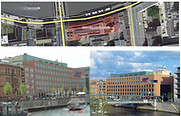
This project proposes a news agency in Berlin designed to promote political transparency in response to evolving global demands. The building is divided into public and private zones, with all areas oriented toward the river and a public-facing news screen at the water’s edge. Key program spaces include studios, live broadcast and video recording stages, a production control room, storage, offices, lounge areas, and a kitchen.
This project illustrates a conceptual and technical study of a bridge integrated into a London highway site. Combining layered site analyses, abstract movement diagrams, and bold 3D models, the drawings explore circulation, structural modules, and urban connection. Together, they reimagine the bridge as an active, multifunctional link transforming transport infrastructure into dynamic public space.
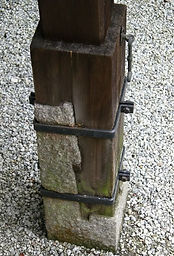
This curated set showcases the precision and beauty of detail timber structures, highlighting traditional joinery and natural building techniques.

It draws parallels between urban lighting strategies and micro-scale design, revealing how architecture begins with the choreo-graphy of visibility.

The natural geometry and spatial tension of the bird’s form become a rich source of inspiration for modeling, drawing, and design exploration.

This series, titled Berlin From Afar, explores a modular bridge system woven into an urban highway corridor. Through layered diagrams, structural prototypes, and bold 3D visualizations, it reimagines the bridge not just as a connector but as an active urban device that transforms movement and space within the city.
bottom of page