
This contemporary residential façade features a striking woven screen that covers the upper level, combining traditional craftsmanship with modern design. The natural texture of the woven material adds warmth and depth, while the modular black metal framework provides structure and contrast. Integrated planters within the screen soften the geometric pattern and introduce greenery, creating a dynamic interplay between nature and architecture. The ground level’s clean lines and neutral tones complement the upper facade, balancing privacy with an inviting street presence.
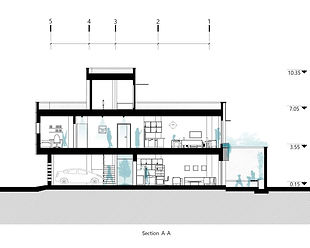

This architectural drawing shown above provides a vertical cut-through view of a multi-level residential building. It reveals the spatial organization and interior layout across two floors, highlighting various rooms such as living areas, bedrooms, bathrooms, and circulation spaces. The drawing includes human figures that give a sense of scale and usage, as well as landscaping elements outside the structure, indicating integration with the outdoor environment. This detailed section helps visualize how the floors relate vertically and functionally within the building’s design.

This close-up captures the intricate texture of the woven facade, showcasing traditional craftsmanship fused with modern architectural design. The natural fibers are carefully interlaced within a sleek metal framework, creating a dynamic pattern that provides both aesthetic appeal and functional shading. This tactile detail highlights the use of locally inspired materials that contribute to the building’s sustainable and cultural identity.


This diagram shows how the building’s woven facade pattern was inspired by a purple tree and its branches. The natural weaving of the branches was stylized into a purple pattern, which is then applied and expanded across the building’s elevation to create an organic, nature-inspired design.

This exploded diagram illustrates the structural and spatial organization of the building. It shows the ground floor, first floor, and roof levels, along with the supporting framework, providing a clear view of how the different components connect and relate within the overall architecture.
These diagrams showcase the building’s layered facade featuring a purple weaving pattern, straw texture, modular frames, and main structure, creating a unique design. They also highlight how the skyline aligns with the surrounding neighborhood for seamless integration.
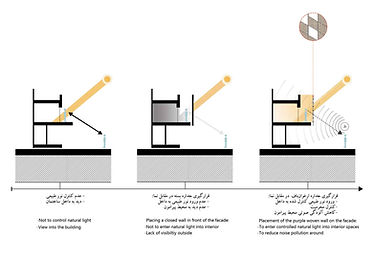
This diagram compares three facade types: one with no light control allowing full visibility but no natural light; a closed wall blocking light and outside views; and a purple woven wall that lets in controlled natural light while reducing noise and maintaining privacy.

